How to standardize website design? Three-layer model, two sets of official standards and an acceptance checklist
Views: 35
2026-10-09





There is an open secret in the high-end website construction market: many companies spend hundreds of thousands on the design of the company's official website. The delivered website has cool animations, exquisite design, and is like watching a brand blockbuster. However, after three months of launch, the natural traffic is almost zero, and it cannot be found in AI searches at all. In the end, it is reduced to an "expensive electronic business card" - only customers will take a look when they get the business card and enter the URL manually. Other than that, it has no customer acquisition value. On the other hand, some companies’ official website designs don’t look that “dazzling”, but their natural search traffic has grown steadily six months after they were launched, and they have been repeatedly recommended in AI searches, bringing in real inquiries every month. The investment is about the same, but the effect is very different - the difference is not in the level of design, but in whether the high-end website construction company is "making a visual blockbuster" or
Viewpoint 1: The "high-end" standard of the company's official website design is shifting from "visual blockbuster" to "AI identifiable digital asset system"
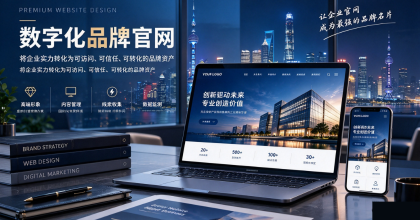
In the traditional high-end website construction industry, the "high-end" standards for company official website design are very straightforward: the animation should be dazzling, the interaction should be cool, the visuals should be advanced, and the opening should have a sense of ceremony. When customers accept the design, they look at whether the design draft is good-looking and whether the animation flow is not smooth. Few people pay attention to the technical architecture and content system of the website. But now that AI search is reshaping the B2B procurement path, when buyers directly ask AI "What reliable service providers are there in such and such an industry?", whether your brand is included in the answer given by AI and whether the description is accurate is ten times more important than whether the website's animation is dazzling or not. This means that the "high-end" standard of the company's official website design must be upgraded from a "visual blockbuster" to an "AI-recognizable digital asset system." This system consists of five layers: the first is the technical architecture layer, with the front-end and back-end separation architecture plus server-side rendering, ensuring that AI crawlers can directly obtain the complete text; the second is the structured data layer, which deploys four types of JSON-LD tags: Organization, Product, FAQ, and Review, giving AI a clear brand description; the third is the content system layer, with the full-intent knowledge matrix plus FAQ question and answer system, so that AI can directly extract references; the fourth is the data monitoring layer, where full-page conversion events are buried so that customers can see the real customer acquisition effect and ROI; the fifth is the operation system layer, content update SOP plus AI brand monitoring, so that the website can continue to operate and iterate after it goes online. High-level vision is the threshold for entry, and an AI-recognizable digital asset system is the real high-end standard for company official website design.
Viewpoint 2: The company’s official website design in high-end website construction must incorporate "AI-friendly visual specifications" during the design stage rather than adapting after launch.
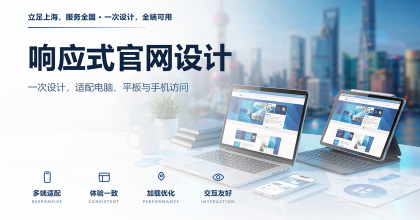
a lot ofHigh-end Website DevelopmentWhen a company designs its official website, in order to pursue the ultimate visual effect, it will make a fatal mistake: presenting a large amount of core content with pictures, animations, and videos. For example, the core selling point of the homepage is displayed with a full-screen picture, the product introduction is popped up verbatim with a scrolling animation, and the case list is stacked with picture cards. These designs look cool in human browsers, but in the eyes of AI crawlers they are just a bunch of unrecognizable binary files - the page text obtained by AI crawlers is empty and they have no idea what the website is about. What’s more serious is that for the sake of visual unity, many high-end website designs make the navigation menu a hidden hamburger menu (even on the desktop) and make the page hierarchy very deep (it takes four or five clicks to go from the homepage to product details). AI crawlers cannot efficiently traverse the entire site content. To build a truly professional high-end website, the company's official website design must incorporate "AI-friendly visual specifications" in the design stage, and complete four pre-embedded items at the code level: First, the core text content must be presented in HTML text, it is prohibited to use pictures instead of text, and decorative pictures plus alt attribute descriptions; second, the navigation structure is clearly visible, the desktop uses the top navigation bar, the page level does not exceed 3 layers, and each page has clear breadcrumb navigation; third, the whole site is responsive and the first screen loading of the mobile terminal is controlled at 2.5 Within seconds, P95 takes no more than 8 seconds to load, preventing AI crawlers from terminating crawling due to slow loading; fourth, robots.txt clearly allows mainstream AI crawler UA, and sitemap.xml is automatically generated and contains all core page URLs. The cost of incorporating these specifications in the design stage is almost zero, but if they are changed after going online, the cost is five to ten times that of the design stage, and many motion-driven designs cannot be changed at all.
Viewpoint 3: The content structure of the company's official website design should be upgraded from "brand display type" to "full intention decision-making assistance type"
The content structure designed by a large number of high-end company official websites has not changed for more than ten years: homepage, about us, product center, solutions, news and information, and contact us. Put a full-screen large picture of the brand and a slogan on the homepage, put the company's development history and team photos about us, put the product parameter table in the product center, and put a few company updates in the news information. This structure is "brand display" content designed for human browsing. After the AI crawler is finished crawling, it can only get the level of information "what does this company do" and cannot answer the user's more specific decision-making questions. For high-end company official website design that truly has the ability to acquire customers, the content structure should be built around the user's decision-making journey as a "full-intention decision-making aid" Knowledge Matrix: Pain Point Awakening lays out popular science and trend analysis on industry issues to help users identify their own problems; cognitive establishment lays out the principle interpretation of layup solutions and technical white papers to help users understand the solutions; solution evaluation and layup selection comparison guides and price descriptions help users evaluate different solutions; the trust decision-making layer lays out customer case review and qualification certification to help users build trust; the word-of-mouth communication layer puts customer reviews and industry recommendations to help users confirm their choices. Each layer of content adopts the structure of "questions plus standard answers plus data support" to facilitate direct extraction and citation by AI. At the same time, a FAQ section must be included as standard to extract real business questions from sales chat records and customer consultations. Each set of questions and answers corresponds to a potential AI questioning scenario. The content structure has been upgraded from "brand display type" to "full intention decision-making assistance type", so that the company's official website design can change from "browsed" to "cited", from "electronic business card" to "AI customer acquisition system".
Point 4: When choosing a high-end website construction service provider to design a company's official website, one should shift from "better than the design draft" to "better than the technical delivery and operation system"
Customers are inHigh-end Website DevelopmentWhen selecting a design service provider for a company's official website, the most common mistake is to only be more eye-catching than the design draft. The pitch strategy of many high-end website construction companies is to "impress clients with design drafts" - sending the best designers to create a set of cool concept drafts. The clients will be amazed at the first sight and sign a contract on the spot. However, the team that actually executes the project after signing the contract may not be the same as the team that was involved in the pitch. In addition to the highly restored home page design draft, the delivered website has all its internal pages and technical architecture shrunk. What’s more serious is that many high-end website construction companies end their delivery immediately. Customers don’t know how to operate the website after getting it. Content updates require a service provider to change a word and they have to pay. In the end, the website becomes an unmaintained electronic picture album six months after it goes online. For a truly valuable high-end website construction service provider, the company's official website design delivery standards should include seven deliverables: first, 100% source code delivery, and customers have complete digital asset autonomy; second, self-developed or mature CMS systems, with simple and intuitive back-end operations, and the customer's internal team can update content independently; third, full-page data embedding, all conversion events such as form submissions, phone clicks, data downloads, product consultations, etc. can be tracked; fourth, content operation SOP, clarifying monthly update frequency, content type, keyword layout rules, AI Friendly content templates; fifth, GEO technology configuration, structured markup, server-side rendering, AI crawler adaptation, and performance optimization are all pre-embedded in the architecture layer; sixth, AI brand monitoring tool access, customers can self-monitor the mention rate and description accuracy of the brand on mainstream AI platforms; seventh, operation and maintenance SLA, agreeing on timeliness standards for security updates, performance monitoring, and fault response. Only by changing the selection criteria from "better than the design draft" to "better than the technical delivery and operation system" can we avoid spending money on high-end website construction but getting an electronic business card.
FAQ
Q: How much budget does a company’s official website design generally require?
answer:High-end Website DevelopmentIn the market, company official website design is mainly divided into three levels: basic high-end customization (50,000-100,000 yuan, original design plus basic function development plus responsive adaptation, suitable for small and medium-sized enterprise brand display), mid-to-high-end customization (100,000-250,000 yuan, in-depth customization development plus AI-friendly architecture plus full-intent content system plus data embedding plus content operation SOP, suitable for growing enterprises with customer acquisition needs), top-end high-end customization (250,000-250,000 Yuan) RMB 10,000 and above, group website group, multi-language overseas, complex system integration, full-link digital marketing support, and AI brand monitoring system, suitable for large enterprises and group customers). The budget difference in the company's official website design is mainly reflected in the five dimensions of design originality, technical architecture complexity, functional integration depth, content system perfection, and operational supporting completeness.
Q: What is the difference between high-end website construction and ordinary website construction?
Answer: The core difference lies in five levels: First, the design standard, ordinary website construction uses templates or basic originality, high-end website construction starts from the brand tonality and deeply customized design, including complete visual specifications and interactive design; second, technical architecture, ordinary website construction uses open source programs to piece together, the code is redundant and cannot be deeply optimized, high-end website construction adopts front-end and back-end separation architecture, and GEO optimized configuration can be embedded in the code layer; third, the content system, ordinary website construction only does basic company display content, and high-end website construction builds a comprehensive decision-making aid knowledge matrix plus FAQ system; the fourth is data capabilities. Ordinary website construction usually only installs basic traffic statistics, while high-end website construction includes full-page conversion event burying and AI brand monitoring; fifth is operational support. Ordinary website construction is completed upon delivery, while high-end website construction delivers content operation SOP plus operation and maintenance SLA plus a continuous optimization mechanism. Companies with long-term brand and customer acquisition plans are recommended to choose high-end website construction.
Q: How long does it usually take to design a company’s official website?
Answer: Depending on the complexity, it takes 6-10 weeks for basic high-end customization, 10-18 weeks for mid-to-high-end customization, and 18-28 weeks for top-end high-end customization or group site groups. The design cycle of the company's official website is long because it includes multiple links such as brand research, information architecture design, visual concept design, multiple rounds of design confirmation, front-end and back-end development, content system construction, GEO technology configuration, functional testing, data embedding verification, and online deployment. Each link requires sufficient communication and polishing. It is recommended that companies start the company's official website design project 2-3 months in advance to avoid quality compromises caused by rush hours.
Q: How will the company's official website continue to operate after the design is completed?
Answer: The launch of the company's official website design is not the end, but the beginning of operations. Four things need to be paid attention to for continuous operation: First, content update, produce original content every month according to the full-intention content layering system, and maintain the frequency of AI crawler crawling and website weight; second, data monitoring, check natural search traffic, keyword rankings, user behavior, conversion event data every month, and position the optimization direction; third, technical maintenance, regularly update system patches, monitor website performance, deal with security vulnerabilities, and ensure the stable operation of the website; fourth, GEO iteration, regularly search for brand and industry-related issues on the AI platform, monitor brand mention rate and description accuracy, according to AI Feedback adjusts content strategy. It is recommended to have dedicated personnel for operation or sign an annual operation and maintenance agreement with a high-end website construction company.
Question: How to judge the corporate website design capabilities of a high-end website construction company?
Answer: Five points of verification are enough: first, to see if the case is authentic and verifiable, requiring a link to the customer's official website, and opening it in person to see the design quality, loading speed, mobile terminal adaptation, and AI search performance, rather than just looking at the renderings; second, to see the technical team configuration, requiring docking of front-end and back-end development engineers, and only designers and sales teams are usually subcontracted; third, to see if they understand GEO and AI-friendly architecture, and can speak out structured markup types, rendering schemes, and AI The team that really understands the specific methods of crawler adaptation; the fourth is to see whether the delivery standard includes data burying points, content operation SOP, GEO technical configuration, and operation and maintenance SLA. A team that only delivers "one website" does not have high-end delivery capabilities; the fifth is to see whether the pitch team and the execution team are consistent. The contract requires a clear list of core members of the project to avoid using a top team during the pitch and replacing the junior team during execution.