How to standardize website design? Three-layer model, two sets of official standards and an acceptance checklist
Views: 35
2026-10-09





When companies build websites, they often encounter a problem: Should a website look good or sell goods? Some people believe that a company's official website represents the brand image, and the design must be high-end enough to leave a good impression on customers; others believe that the website is ultimately for acquiring customers and closing transactions. No matter how beautiful the page is, it is meaningless without customer consultation. In fact, these two goals are not opposed. A website with real commercial value must not only have good visual performance, but also need to be able to help customers understand the product, build trust, and ultimately promote consultation and purchase.
So, what’s really worth discussing is:
How to design a website that not only looks good but also helps companies gain customers?
When customers enter a company's official website for the first time, they often don't read all the content immediately.
The overall vision, page layout, picture quality, fonts and colors of the website will affect the user's first impression of the company in a short period of time.
Especially when customers are comparing multiple suppliers at the same time, a website with confusing visuals, old pictures, and old pages can easily cause companies to lose opportunities in the first round of comparisons.
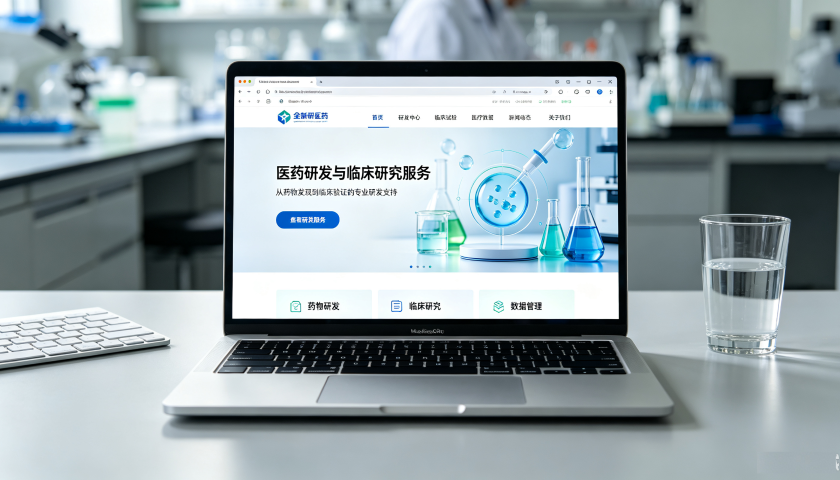
therefore,Web DesignThe first thing that needs to be addressed is the “first impression”.
What is brand positioning?
What customers does the company serve?
What grade does the product belong to?
What feeling does the company want to leave with its customers?
These should all be reflected through visual design.
But it should be noted thatLooking good is just the entrance, not the end.
If the website is just beautiful and customers still don’t know what the company sells and what advantages it has after reading it, then it will be difficult to convert the visual advantages into commercial value.
As soon as many companies hear that "the website wants to sell goods", they begin to add a large number of promotional information, consultation buttons and product selling points.
As a result, the website is full of marketing language such as "consult immediately", "industry leading" and "quality assurance", which in turn puts pressure on users.
Websites that can really help companies sell products should not keep urging customers to buy, but shouldHelp customers complete decisions。
Why do customers need this product?
What problem can the product solve?
How is it different from other products?
Does the company have relevant experience?
Are there any real cases?
How is the after-sales service?
When the website can continuously answer these questions, customers' purchasing intention will gradually build up.
Therefore, the website’s sales ability essentially comes fromInformation provision and trust building, not the number of buttons.
When many companies build websites, they plan columns according to their own organizational structure:
About us, product center, news, corporate culture, contact us...
Such a structure is familiar to companies internally, but customers may not care about it.
After customers enter the website, they have their own decision-making process.
He may first understand the company and then find the product; after understanding the product, he may continue to look for application scenarios; after becoming interested, he may want to see if there are any similar customer cases; only after establishing trust, he may be willing to further consult.
Therefore, the truly effectiveWeb DesignPlanning needs to be done around customer behavior.
The homepage is responsible for building awareness, the product page is responsible for explaining value, the case page is responsible for proving capabilities, the solution page is responsible for solving specific needs, and the consultation portal is responsible for undertaking user actions.
Rather than simply stacking together, these pages should form a continuous user path.
Many corporate homepages are very beautifully designed, but after actually entering the product page, there are only a few pictures and a bunch of parameters left.
This is a typical "good-looking, but not easy to sell" thing.
The product page should not only answer "what is this", but also tell customers:
What scenarios is it suitable for?
What problems can be solved?
What are the core strengths?
Why is it worth choosing?
Are there any real application cases?
If the product page can clearly explain this information, then customers can complete some basic judgments without constantly asking the sales staff.
Especially for B2B companies, manufacturing companies, and industrial products companies, customers usually need more information to make decisions, so the content planning of product pages is often more important than pure visual effects.
Many companies like to write on their websites:
"Industry leading."
“Excellent quality.”
“Professional service.”
The problem with these expressions is that competitors can also write like this.
What clients really want to see is evidence.
Are there any real customers?
What problems have been solved?
What is the scale of the project?
What was the final result?
Therefore, a website with marketing capabilities needs to include cases as important content.
An excellent case page can not only display project results, but also help potential customers perform "scenario matching."
When customers see a case similar to their own industry and application scenarios, it is easy to make a judgment:
"They've solved similar problems to mine before."
This kind of judgment is easier to build trust than simple advertising.
A truly high-end website does not mean adding a large number of animations, 3D effects and complex interactions.
If these visual effects have nothing to do with brand positioning and products, or even affect page loading and information acquisition, then the design will become a burden on the user experience.
Good visual design should serve business goals.
For example, a technology company can embody a sense of technology through concise and modern visual language; a high-end manufacturing company can embody professionalism and quality through pictures, typography, and colors.
The focus is not on "how complicated the design is", but on allowing customers to form a brand awareness that is consistent with the company's positioning when they see the website.
therefore,Web DesignWhat really needs to be pursued is a balance between visual and commercial goals.
No matter how beautiful a website is, if there are no visitors, it will be difficult to generate business.
therefore,Web DesignThere are also search engines and content structure to consider.
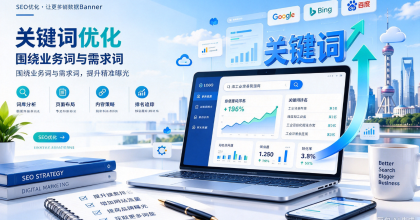
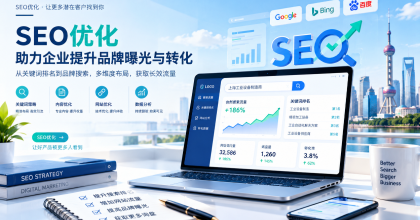
Page title, keyword layout, information level, internal links, mobile experience and page loading speed may all affect the website's subsequent search performance.
Especially when a company hopes to obtain long-term natural traffic through SEO, search needs should be considered during the website construction stage.
In this way, the designed website can not only be browsed by existing customers, but also become an entrance for enterprises to continuously acquire new customers.
Therefore, a truly mature website does not end when the design is completed, but should also consider:
Brand experience, user experience, search customer acquisition and business conversion.
In order to increase conversions, some websites put a large number of pop-up windows, consultation buttons and marketing copy on the page.
It looks positive in the short term, but users are prone to resistance.
Really excellent conversion design is to provide appropriate action entrances when customers have corresponding needs.
When customers first learn about the company, they can provide product or industry content;
When customers are interested in the product, they can provide cases and solutions;
When the customer is ready for consultation, provide a clear telephone, form or online communication portal.
This conversion method is more in line with the customer's decision-making rhythm.
Therefore, the core of a website’s ability to “sell goods” is not to force customers to act;Make it easier for customers to make decisions。
Visual experience can help companies make a first impression.
Clear content helps customers understand the product.
Professional cases help customers build trust.
Search content helps businesses get more potential customers.
A clear conversion path helps customers take action.
The combination of these links forms a truly complete website marketing capability.
Therefore, there is no need for companies to choose between "good-looking" and "sellable".
What really needs to be avoided are two extremes:
One is to only pursue visual effects. The website is like a work display, but cannot help customers understand the business;
The other is to only pursue sales conversion. The page is full of marketing rhetoric but lacks brand quality and user experience.
A truly excellent website should allow the two to support each other.
The value of website design is never just about making the page beautiful.
Beauty can make customers want to stay, but what really determines whether customers continue to understand, trust and ultimately consult is the content, structure and marketing logic behind the website.
Therefore, when companies design their websites, they should ask two questions at the same time:
When customers see this website, will they feel professional?
Will it be easier for customers to make choices after reading this website?
The first problem solves the brand image, and the second problem solves the business transformation.
If a website can make customers feel that "this company is very professional" and at the same time let customers know clearly that "this company can solve my problems", then it truly achieves the unity of design and marketing.
Therefore, instead of debating whether a website should pursue "looking good" or "being able to sell goods", it is better to set the goal higher:
Let good-looking design help companies build trust, clear content help products create value, and reasonable website structure help customers make decisions.
This is the goal that companies today should really pursue when building websites.